9 October 2025
Fire Door Maintenance - What Annual Inspection Requires
A fire door's rating only holds if its self-closing mechanism, seals and hardware remain functional. Here's what an annual fire door inspection should cover.
A fire door achieves its certified rating as a complete, correctly functioning assembly - and that performance can degrade over time through wear, damage, or well-meaning but non-compliant alterations made during the building's operational life. A door wedged permanently open, a damaged intumescent seal, or hardware that has been replaced with a non-rated equivalent can each independently compromise a door's fire performance, even though the door leaf itself remains the originally certified product. Regular inspection - a requirement under the Fire Safety (England) Regulations 2022 for flat entrance fire doors, and good practice for all fire doors - is the mechanism by which these issues are identified and corrected before they matter.
Self-Closing Mechanism Checks
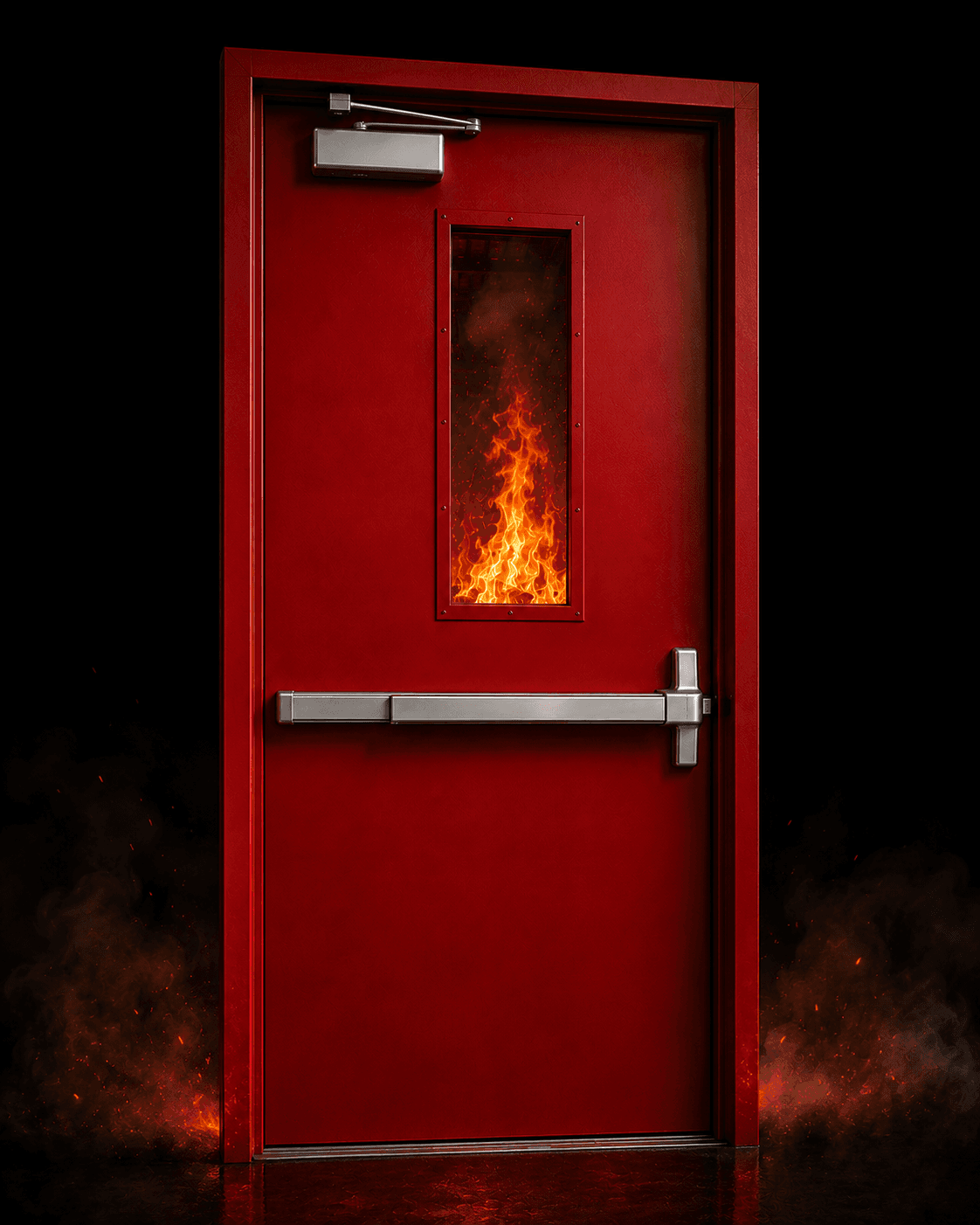
Every fire door relies on its self-closing device - typically an overhead door closer - to return the leaf to its closed and latched position after use. Inspection should confirm the closer is present, correctly adjusted (closing fully and latching, not just swinging most of the way shut), and free of leaks or damage. A door that closes but doesn't latch is, for fire protection purposes, an open door - air pressure differentials during a fire can push an unlatched door open, defeating the compartment line entirely.
Intumescent Seal Inspection
Intumescent seals - strips set into the door leaf or frame that expand when heated to seal the gap between leaf and frame - are critical to a door's integrity performance but are easily damaged or painted over during redecoration, which can affect their expansion behaviour. Inspection should check that seals are continuous around the door's perimeter, are not damaged, cut, or missing in sections, and where smoke seals are also fitted (often a separate brush or fin seal), that these remain intact and provide continuous contact with the frame when the door is closed.
Hardware and Hinges
Hinges, locks, latches and any vision panel glazing beads are all part of the tested assembly. Inspection should confirm hinges are not loose, cracked or showing signs of excessive wear (which can cause the door to drop and bind, or fail to close fully under its own weight assist), and that any hardware replaced since installation is a fire-rated equivalent matching the original specification - not a like-for-like substitution based on appearance alone. For doors with panic hardware or access control integration, confirm these systems do not prevent the door from latching when released.
Record Keeping Requirements
Inspection records should document the door's location, its certified rating and reference (linking back to the original EN 1634-1 test report and EN 13501-2 classification where applicable), the date of inspection, findings, and any remedial action taken and its completion date. This record serves two purposes: it provides evidence of ongoing compliance for facility audits and insurance purposes, and it builds a maintenance history that can identify recurring issues - for example, a door that repeatedly fails to latch may indicate a frame alignment issue that needs structural attention rather than repeated hardware adjustment. BÖLDT's after-sales service network can support periodic inspection programmes for fire door installations supplied by us, including replacement of fire-rated hardware and seal components to original specification.