1 July 2026
Fire-Rated Glazing in Fire Doors - What Vision Panels Are Actually Made Of
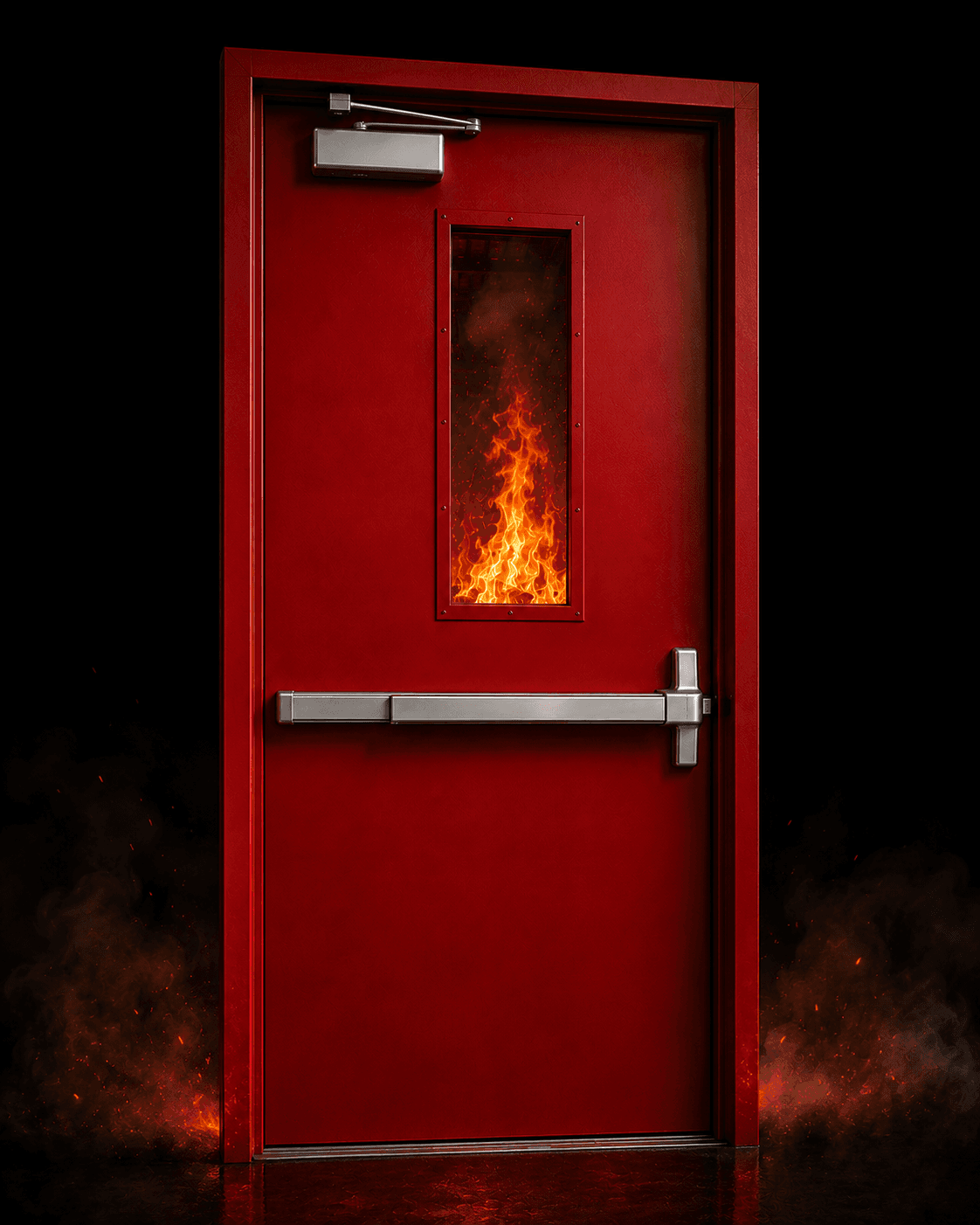
A vision panel in a fire door isn't ordinary glass - it's a specific fire-rated glazing product, tested as part of the door assembly. Here's what's actually behind that clear panel.
Vision panels - the glazed sections built into many fire doors to allow visibility across a doorway - look like ordinary glass, but standard glazing has no meaningful fire resistance at all: it typically fails and falls out of its frame within a few minutes of direct flame exposure. The glazing in a certified fire door vision panel is a specific fire-rated product, tested as part of the door assembly, and it needs to be understood and specified separately from standard architectural glazing.
The Main Fire-Rated Glazing Types
Two broad categories of fire-rated glazing are used in fire doors. Fire-protective glazing - traditionally wired glass, and more recently specialty tempered or laminated products - resists the spread of flame and smoke but does not significantly block radiant heat, meaning it can become dangerously hot to stand near even while remaining intact. Fire-resistive glazing, most commonly clear ceramic glass or laminated multi-layer glass units, additionally provides an insulation function, significantly reducing heat transfer through the glazed panel - the glazing equivalent of the E/EI distinction used for the surrounding door. Ceramic glass in particular can maintain clarity and structural integrity at temperatures well above 800°C, making it suitable for higher-rated doors where insulation performance matters, not just flame containment.
Matching Glazing Classification to Door Classification
Fire-rated glazing is classified using the same EN 13501-2 criteria as the surrounding door - E for integrity-only performance, EI for integrity plus insulation. A door leaf rated EI 60 fitted with E-classified (integrity-only) glazing does not achieve an overall EI 60 rating at the glazed section, because the glazing's insulation performance doesn't match the surrounding leaf - the vision panel becomes the weak point in an otherwise correctly rated door. Specifiers need to confirm the vision panel glazing classification matches - or exceeds - the fire door's overall required rating, not simply confirm that the glazing carries some fire rating in general terms.
Glazing Is Part of the Tested Assembly, Not an Add-On
As with hardware, fire-rated glazing is tested as part of the complete door assembly, including the specific glazing bead, seal and frame detail used to hold it in the leaf. Substituting a different fire-rated glass product - even one with an apparently equivalent rating on its own datasheet - into an existing certified door frame detail is not automatically valid, since the glazing method (bead profile, intumescent glazing tape, panel size and position) was tested as a specific combination, not as an interchangeable, generic component.
Practical Guidance for Specification
- -Confirm the vision panel glazing's own EN 13501-2 classification (E or EI, with time period) separately from the door leaf's classification - they need to match or the glazing becomes the weak point.
- -For higher fire resistance ratings (EI 60 and above), specify EI-classified glazing rather than E-only fire-protective glazing, to maintain insulation performance across the whole doorset.
- -Treat glazing size, position and bead detail as part of the tested configuration - don't assume a larger or repositioned vision panel is automatically valid on a certified door.
- -Request the glazing manufacturer's own test evidence alongside the door's overall doorset certification, particularly for large or unusually shaped vision panels.
BÖLDT glazed steel fire doors are supplied with fire-rated glazing matched to the leaf's overall EN 13501-2 classification, tested as a complete assembly rather than a glazed panel added independently.