14 May 2026
Fire Curtain vs Fire Door - Which Passive Fire Protection Solution Do You Need?
Fire doors and fire curtains both create fire-resistant barriers, but they solve different design problems. Here's how to decide which one your opening needs.
On a drawing, a fire-rated opening can be filled in two fundamentally different ways: a fire door - a rigid, hinged or sliding leaf in a frame - or a fire curtain - a flexible fabric barrier that deploys from a concealed head box. Both are tested to provide integrity and, depending on type, insulation and radiation control. But the decision between them is rarely about preference. It is driven by the geometry of the opening, the function of the space, and how the building operates day to day.
Two Different Jobs
A fire door is a permanent, operable element of the building envelope. It is opened and closed (or held open on a hold-open device) as part of normal daily use, and self-closes or fails safe in the event of a fire. It is the correct solution wherever a physical, lockable, hinged barrier is required as part of the building's everyday circulation - stairwells, lift lobbies, plant rooms, and corridor compartment walls.
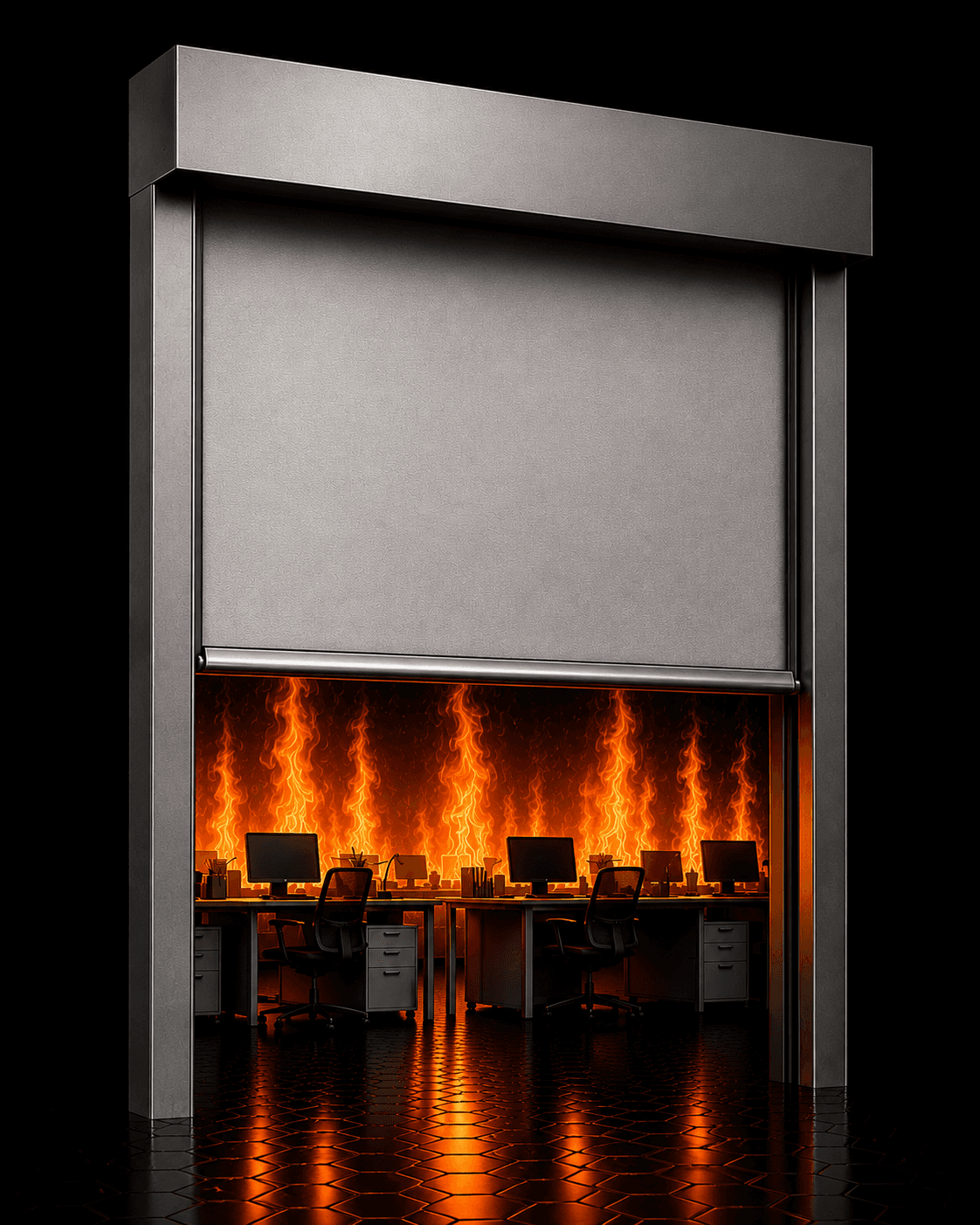
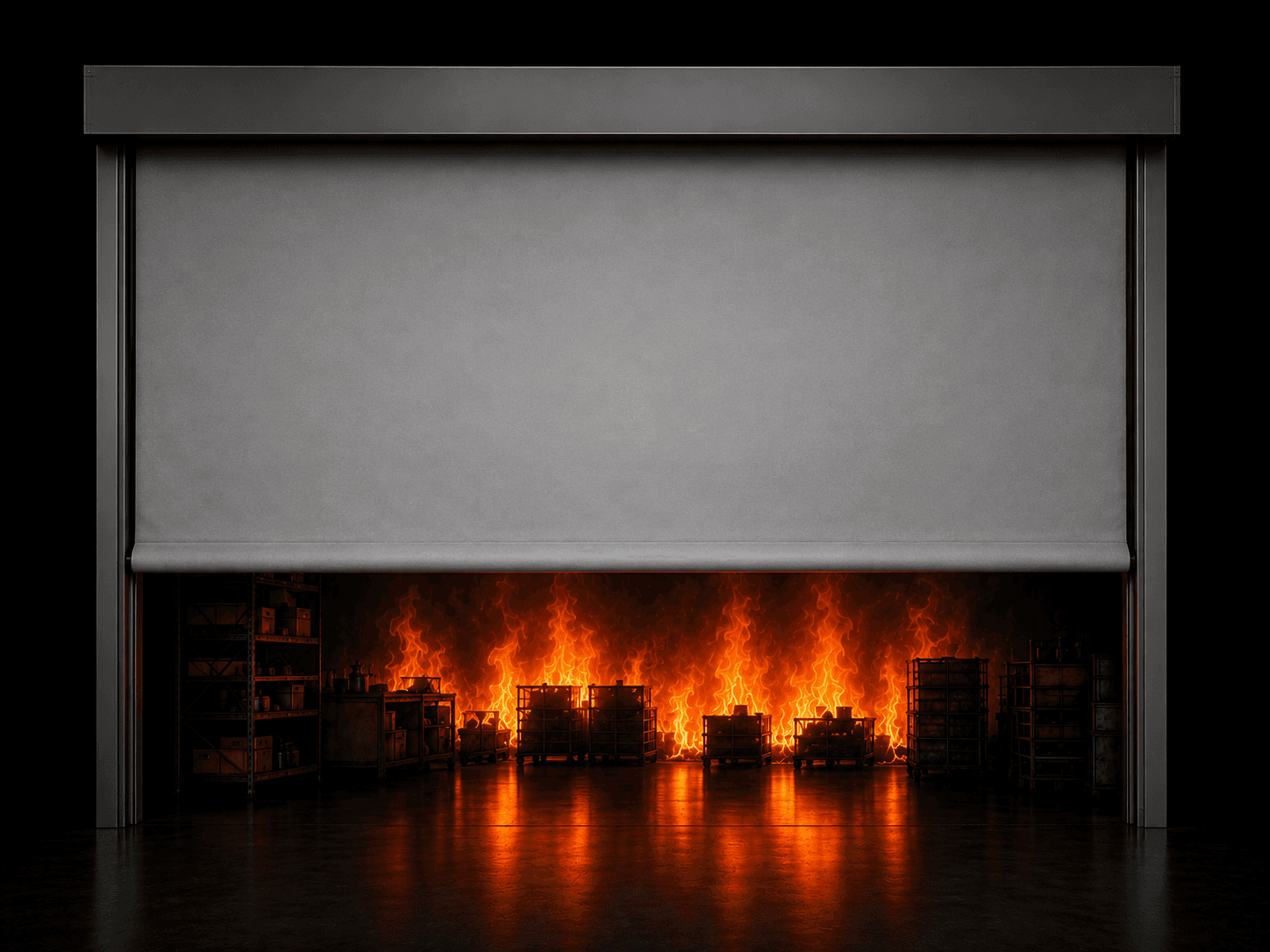
A fire curtain, by contrast, is invisible during normal operation. It remains concealed within a head box mounted at ceiling level and only deploys - under gravity, with a fail-safe mechanism - when triggered by the fire alarm system or on loss of power. It is the correct solution for large or irregular openings where a hinged door simply cannot work: atrium boundaries, escalator openings, mall frontages, and wide spans between zones that must remain visually and physically open under normal conditions.
When Geometry Decides for You
Fire doors are manufactured in design sizes - BÖLDT's steel fire door systems go up to a tested rating of 120 minutes in single or double leaf configurations, but they are fundamentally bound by practical leaf dimensions and door swing requirements. Once an opening exceeds what a hinged or sliding door leaf can reasonably span - a 12-metre atrium opening, for example, or a column-interrupted facade - a fire curtain becomes the only viable option. BÖLDT's automatic fire curtain models are rated for unlimited width, and one model for unlimited drop, specifically to address these large-format openings.
Retrofit vs New Build
In retrofit projects, fire curtains often have a structural advantage: the head box can be surface-mounted or recessed into a false ceiling void with comparatively minimal structural intervention, whereas introducing a new fire door frame into an existing wall can require significant structural modification. In new-build projects, both solutions are designed in from the outset, and the decision tends to follow function - egress routes and compartment walls get fire doors; large open-plan boundaries and atria get fire curtains.
Cost and Lifecycle Considerations
Fire doors involve ongoing mechanical maintenance - door closers, hinges, intumescent seals and latching hardware all require periodic inspection (see our maintenance guide for details). Fire curtains, with gravity fail-safe deployment and no battery backup requirement, have fewer moving parts in everyday operation, but the head box, guide rails and motor controller still require commissioning checks and periodic functional testing as part of the fire alarm system test regime.
In many large projects, the answer is not either/or - it is both, applied to the openings each is suited for. BÖLDT manufactures the full range in-house, which means a single technical team can advise on the correct solution for every opening on a project, with consistent documentation for Approved Document B and BS 9999 compliance.