
18 June 2026
Fire Doors in Italy: The Codice di Prevenzione Incendi and REI Classification
Italy's 2015 Fire Prevention Code introduced a risk-profile-based approach to fire safety design, running alongside the legacy REI classification system. Here's what specifiers need to know about both.
Italy's fire prevention framework changed significantly with the Codice di Prevenzione Incendi, introduced by Decreto Ministeriale 3 agosto 2015 (Gazzetta Ufficiale n. 192 of 20 August 2015). The Code offers an alternative to Italy's long-standing collection of occupancy-specific prescriptive fire regulations, built instead around defined risk profiles - giving designers and fire engineers a structured, performance-based route to demonstrating compliance rather than working solely from prescriptive, occupancy-by-occupancy rules.
How the Risk Profile System Works
The Code characterises a building's fire risk using a two-part risk profile: a letter describing the type of occupants (accounting for factors such as mobility and familiarity with the building) and a number describing the anticipated rate of fire growth for that occupancy. Common occupancy types have their risk profile pre-tabulated in the Code's supporting decree of 7 August 2012, giving designers a documented starting point rather than a from-scratch risk assessment for standard building types. Notably, the presence of an automatic fire protection system - such as a sprinkler system that can control or extinguish a fire - allows the fire growth rate component of the risk profile to be reduced by one level, which can materially affect the passive fire protection requirements, including fire door and fire curtain specification, that follow from the assessed risk profile.
REI Classification: Italy's Established Notation
Alongside the risk-profile-based Code, Italian fire door and fire curtain specification continues to use the REI notation for fire resistance classification, aligned with the EN 13501-2 performance criteria: R (capacità portante / load-bearing capacity), E (tenuta / integrity), and I (isolamento / insulation), each expressed with a time period in minutes - REI 30, REI 60, REI 90, REI 120. This is the same underlying EN 13501-2 classification framework used across the EU, expressed with the Italian-language R-E-I notation rather than the E/EI/EW shorthand more commonly seen in UK and other European documentation. A door or curtain tested to EN 1634-1 and classified to EN 13501-2 can be specified and understood in Italy using the REI notation directly, without any change to the underlying test evidence.
Applying the Code to Fire Doors and Curtains
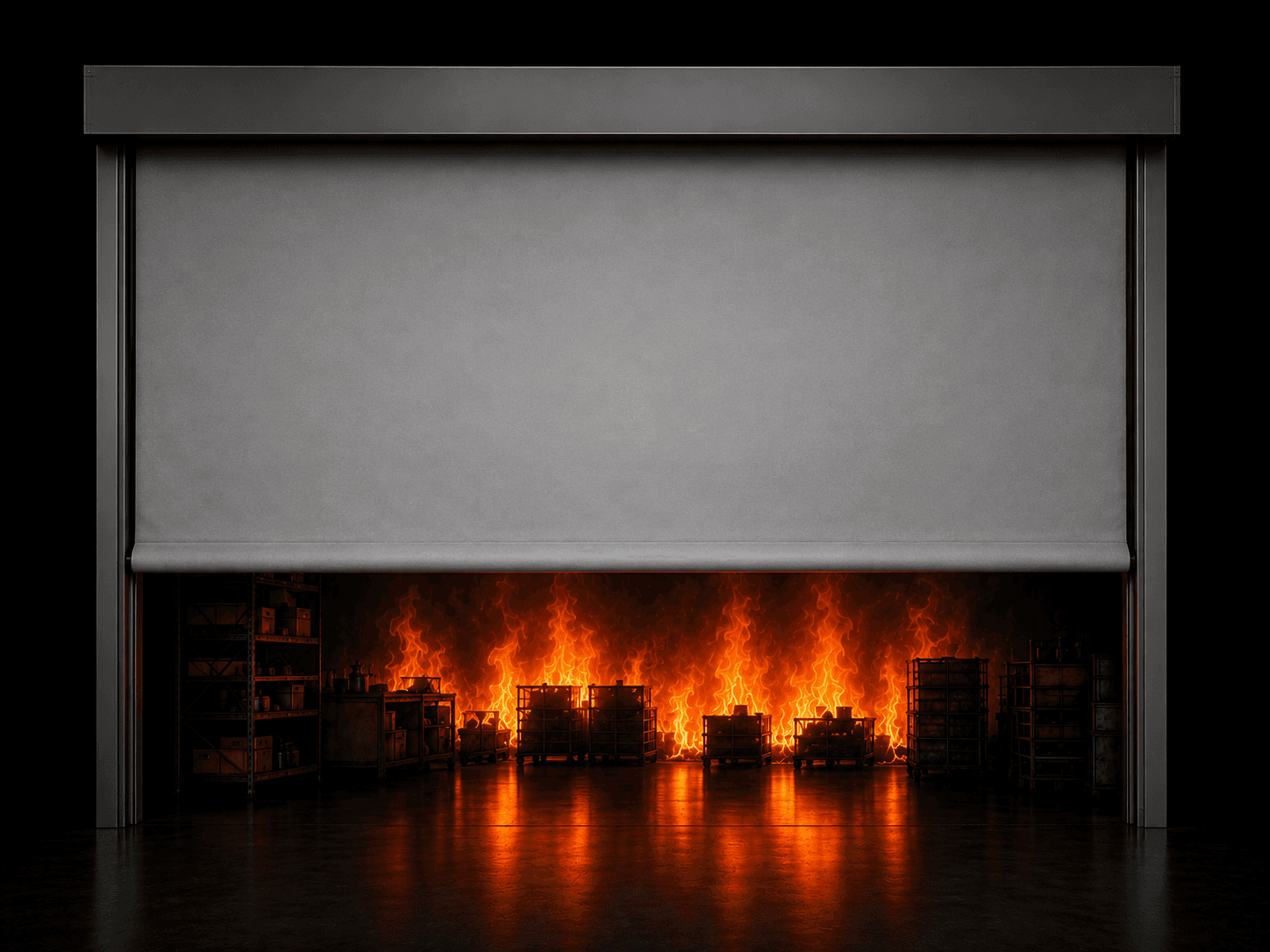
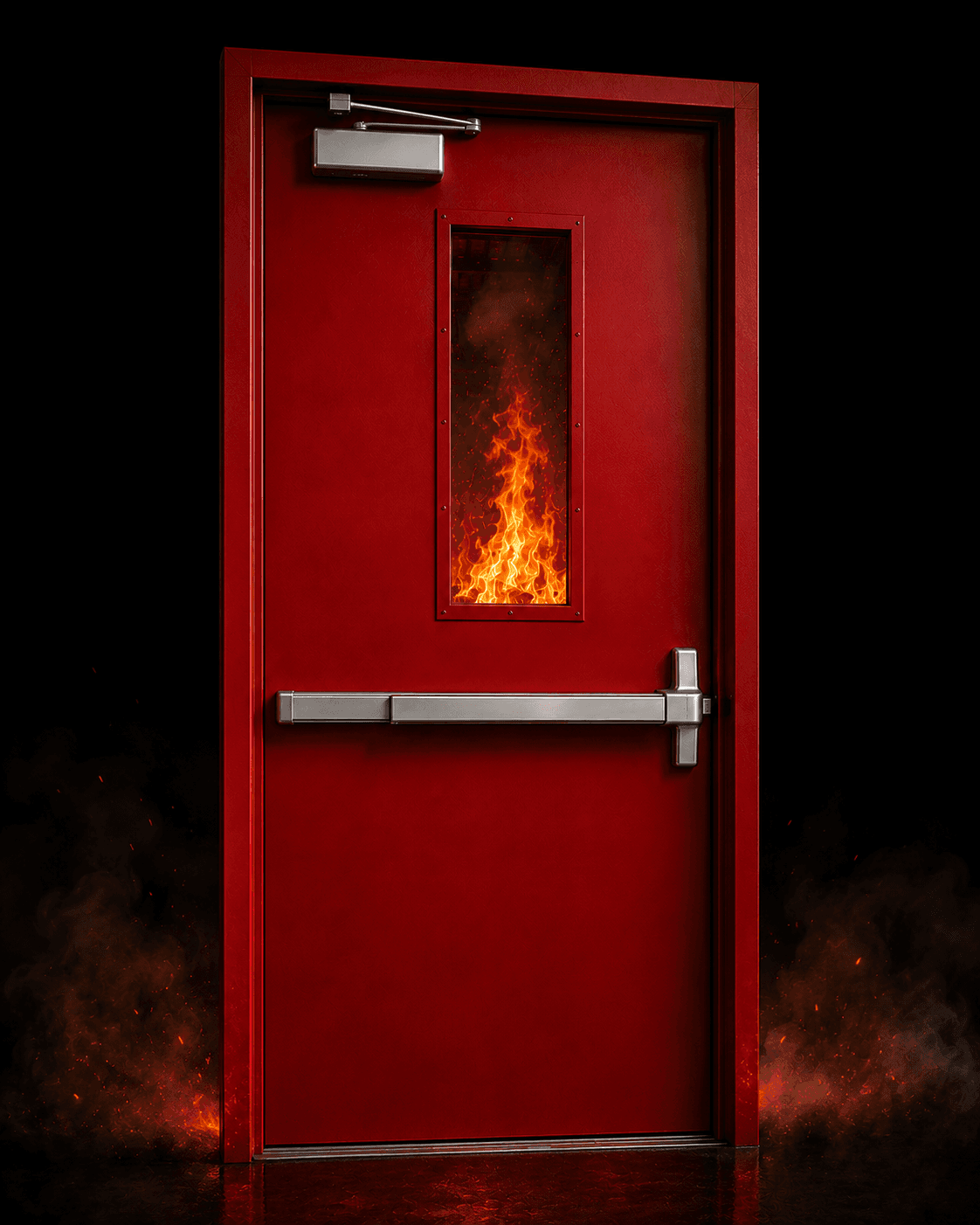
For fire doors and fire curtains specifically, the practical effect of the Codice di Prevenzione Incendi is to make the required REI rating a function of the calculated risk profile for the specific building and occupancy, rather than a fixed value read from an occupancy table. This means two buildings of the same occupancy type - say, two logistics warehouses - can carry different compartment door and fire curtain rating requirements if one has a materially different fire growth risk profile (for example, due to stored goods, building height, or the presence of an automatic suppression system). Specifiers working under the Code should obtain the project's calculated risk profile from the fire engineer or designer of record before finalising fire door and fire curtain REI ratings, rather than assuming a rating based on occupancy type alone.
Practical Guidance for Specifiers
- -Confirm whether the project is being designed under the Codice di Prevenzione Incendi (risk-profile-based) or under a legacy occupancy-specific prescriptive regulation - the two use different logic to arrive at a required rating.
- -Where the Code applies, obtain the project's calculated risk profile (letter + number) from the fire engineer before finalising door and curtain REI ratings.
- -Note that the presence of an automatic suppression system can reduce the fire growth rate component of the risk profile, potentially affecting the required passive protection rating - confirm this has been accounted for in the specification.
- -REI notation and EN 13501-2 (E/EI/EW) notation describe the same underlying test evidence - request the underlying EN 1634-1 test report if REI documentation alone leaves any ambiguity about the exact product configuration tested.
BÖLDT fire doors and fire curtains are tested to EN 1634-1 and classified to EN 13501-2, and documentation can be presented in REI notation for Italian specification and fire engineering review.